Growing
Bốn tầng tán rừng: kiến trúc của một khu vườn cà phê tử tế
Kiến trúc vườn cà phê bốn tầng tán rừng ở Khe Sanh: sơ đồ từng tầng, vi khí hậu mát và bóng che giúp hạt chín chậm, ngọt sâu và bền vững cùng đất.
26 Jun 20268 min read
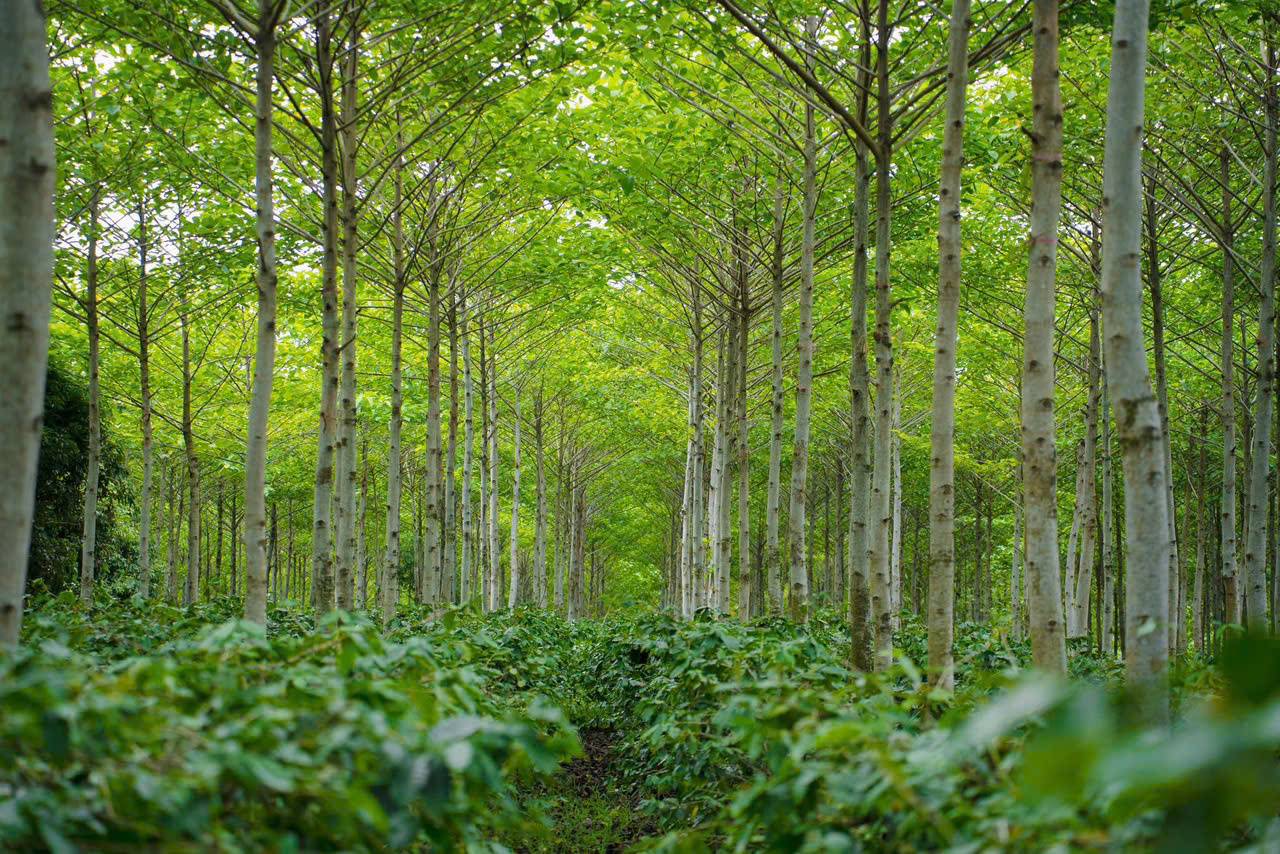
Specialty coffee nurtured beneath four forest canopy layers in Hướng Phùng, Khe Sanh, Vietnam — where the forest and its people nourish each other.
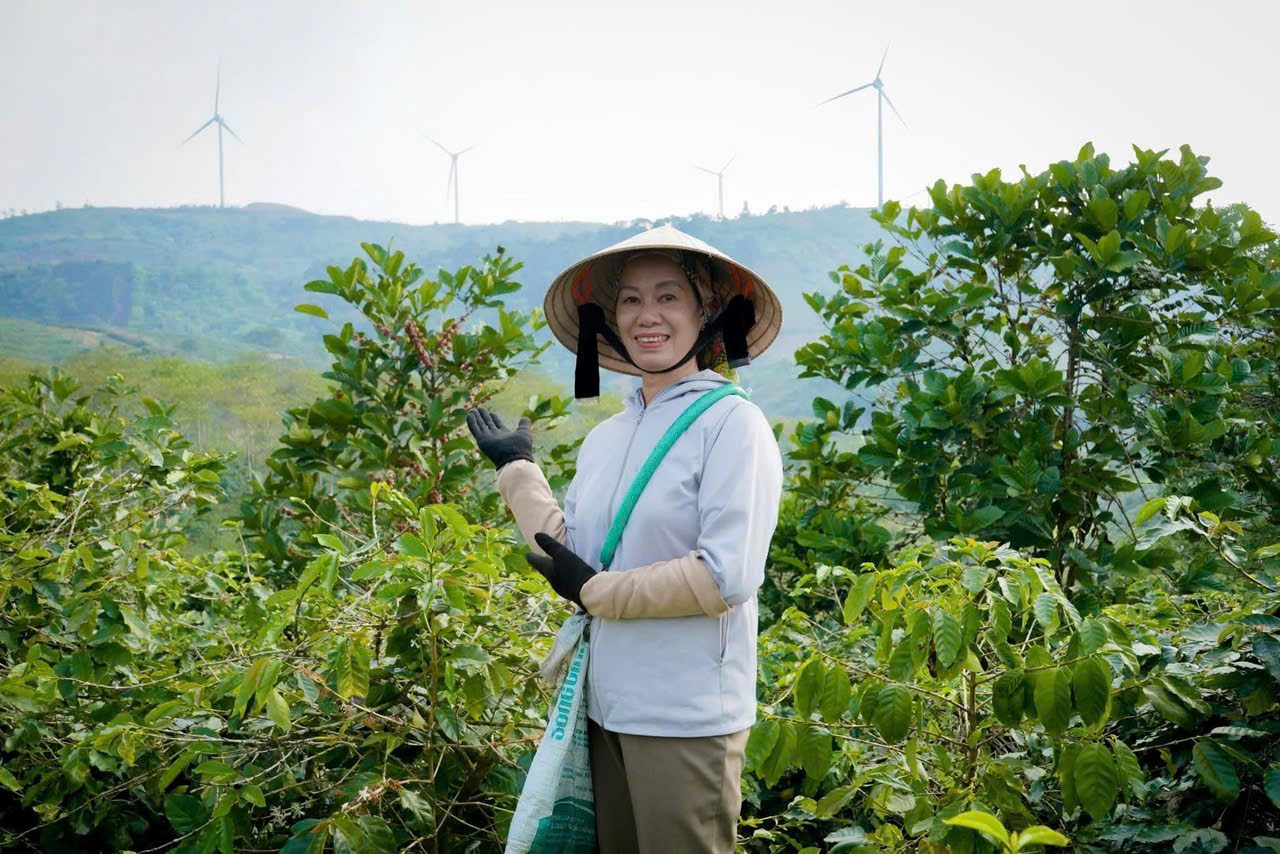
Madam Hương started over after the 2012 coffee-price crash, when many gardens nearby were cleared for lack of profit. To save hers, she interplanted timber and fruit trees between the remaining coffee rows — at first purely a matter of survival.
Over time that intercropped garden grew into a complete four-layer agroforestry ecosystem. Its biodiversity keeps pests in check naturally, the soil stays moist and friable, and — most importantly — cup quality improved markedly.
From a survival measure, Madam Hương’s model now yields Liberica ranked Top 1 in Southeast Asia 2024 and Arabica scoring 84.75 SCA.
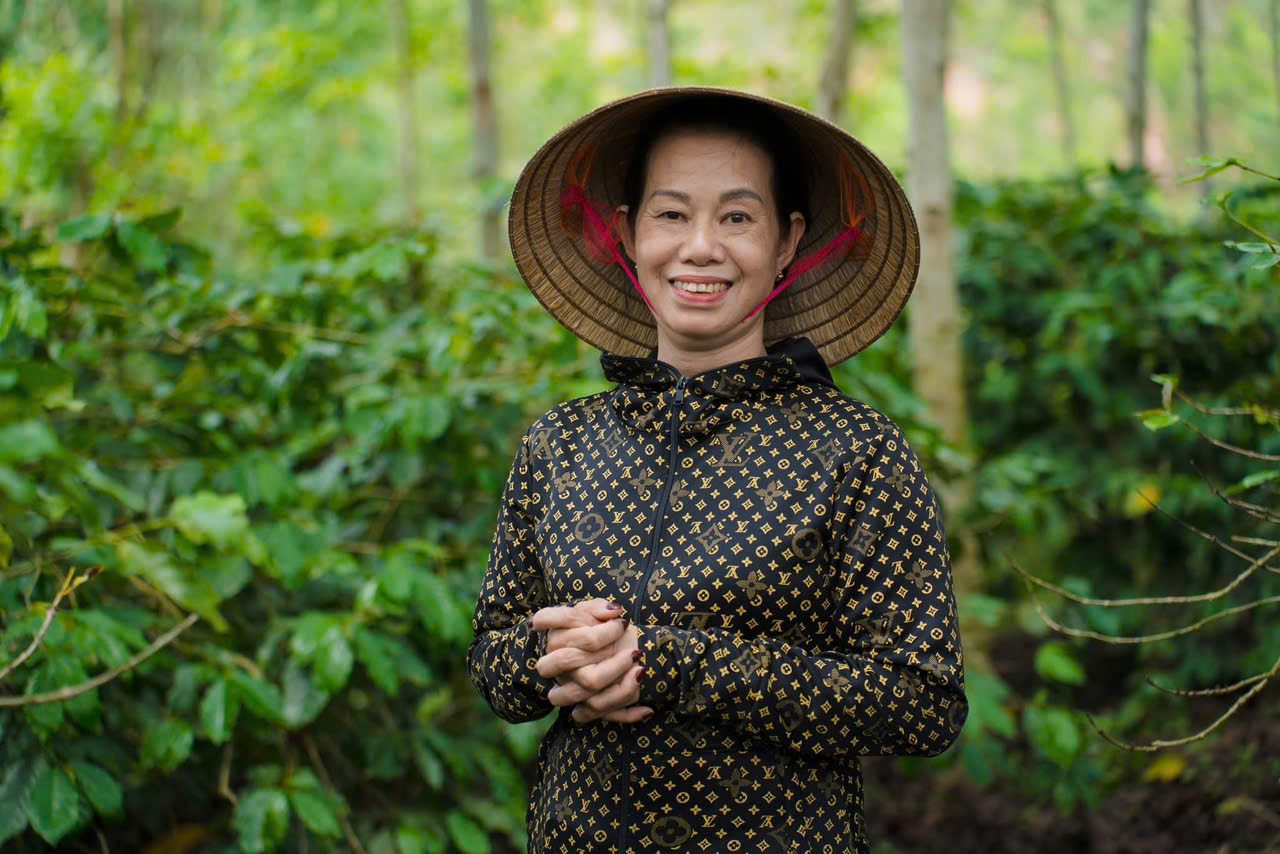
A short film of the four-layer forest garden and the people behind Madam Hương Coffee.
On the red basalt soil of Hướng Phùng, 15 hectares of coffee grow in a four-layer agroforestry system. Timber trees, Liberica, Arabica and herb-and-spice plants share one closed ecosystem, entirely free of chemical pesticides.
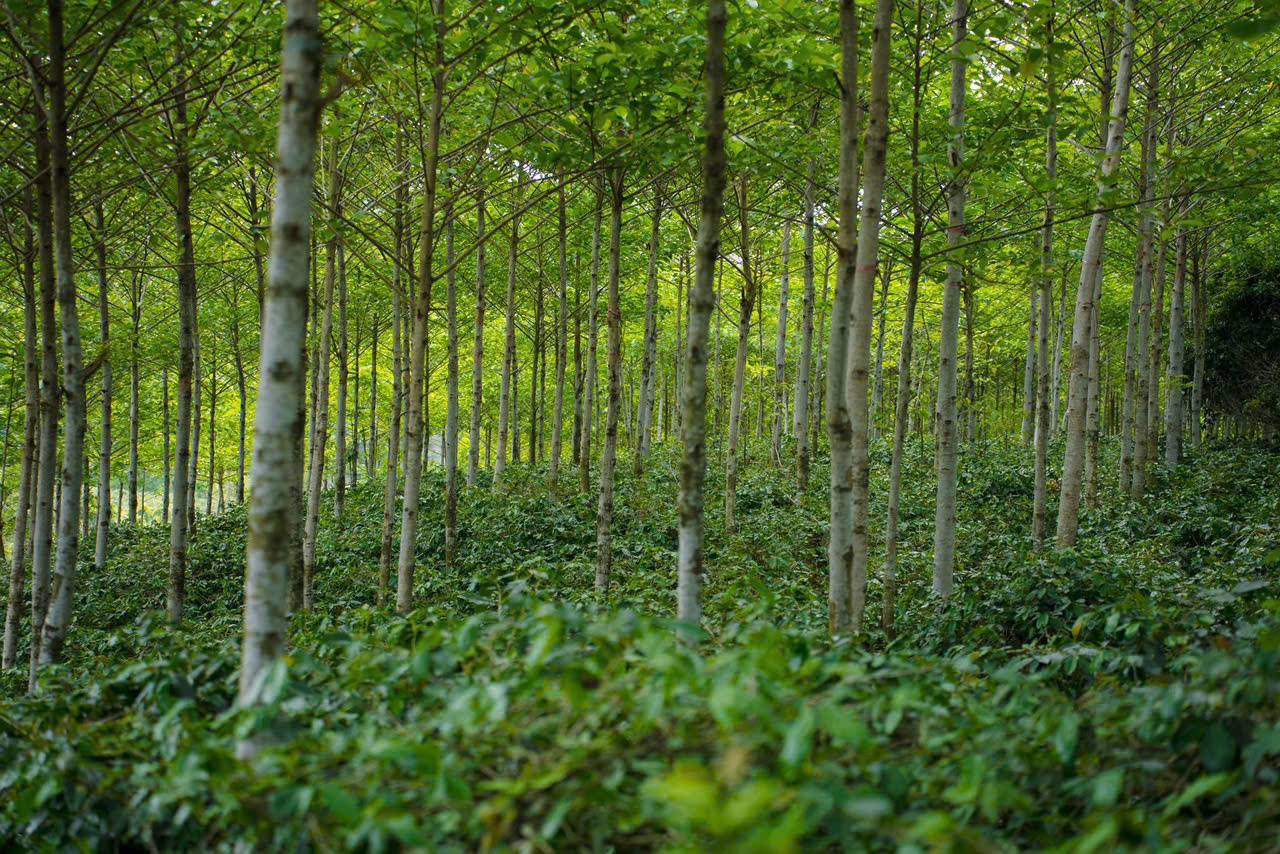
The four-layer canopy creates a stable microclimate — something coffee monoculture cannot achieve — helping the plants withstand extreme weather and yield higher-quality beans.
The canopy limits heat shock for Arabica. Coffee ripens more slowly beneath the forest, accumulating more sugars and improving both bean body and flavour.
The canopy reduces evaporation and the need for irrigation. Natural processing (drying the whole cherry) minimizes wastewater and protects water sources.
The root systems of timber trees hold the soil on hilly terrain; fallen leaves form a layer of organic humus, raising natural fertility and restoring degraded soil.
A diverse ecosystem attracts natural predators (birds, bees, butterflies, beneficial spiders); medicinal plants repel insects naturally, sustaining clean cultivation.
Long-lived timber trees — yellow cadamba in particular — absorb and store CO₂, laying the foundation for future carbon-credit revenue.
The multi-layered space is a habitat for bees, birds, butterflies, and beneficial organisms, supporting pollination and natural balance across the hills of Quảng Trị.
The model diversifies income across multiple product tiers, reducing risk when coffee prices swing — measured per hectare per year at steady state.
Traditional coffee monoculture in Hướng Hóa typically yields ~150 million VND profit/ha/year. The multi-layered canopy model delivers more than three times the economic return, while being more sustainable for the environment and climate.
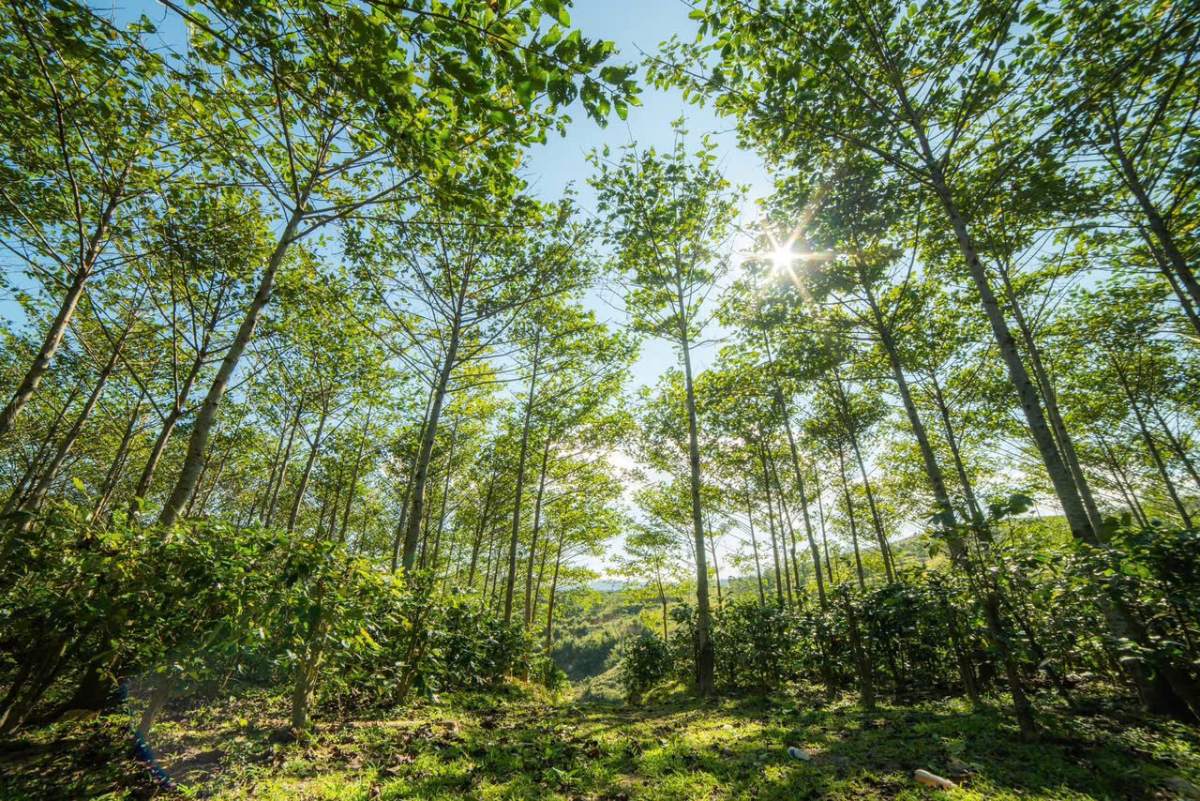
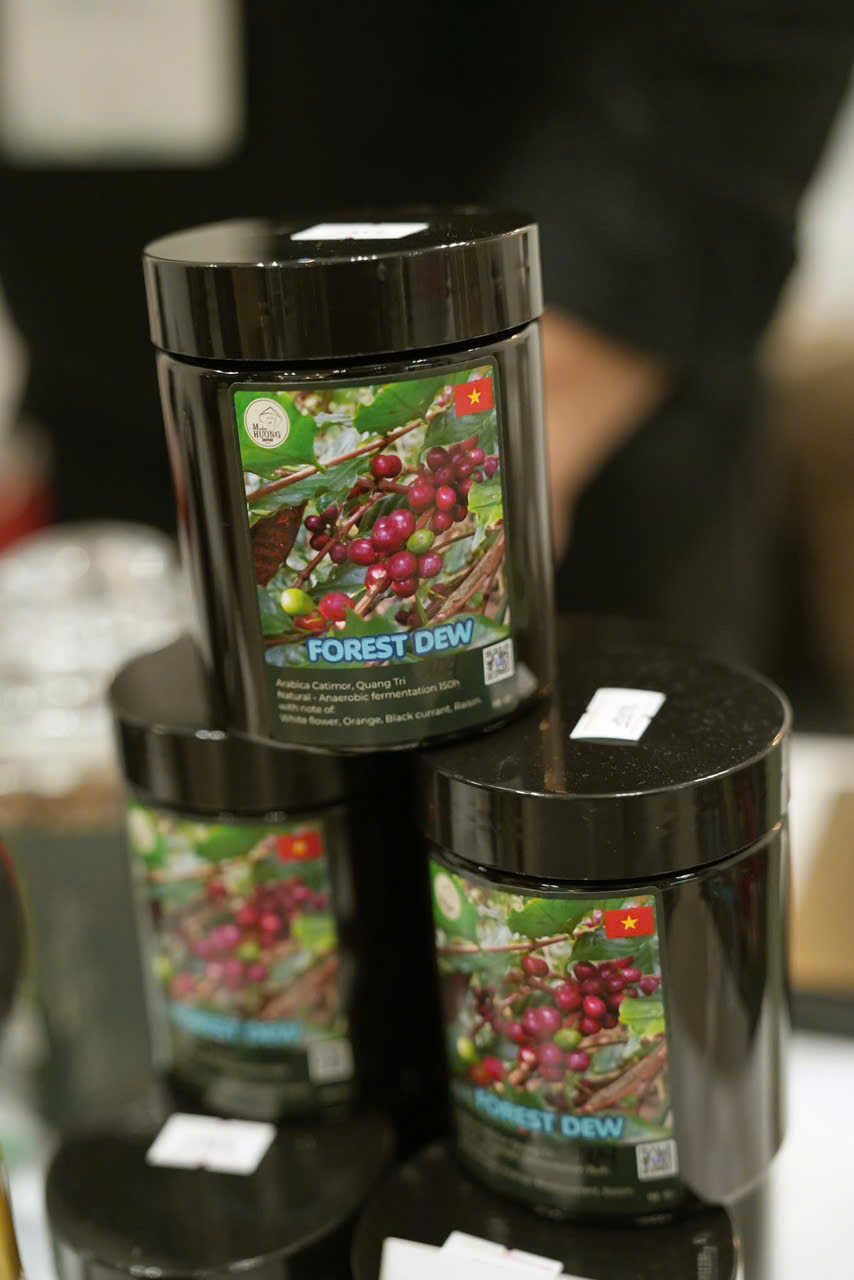
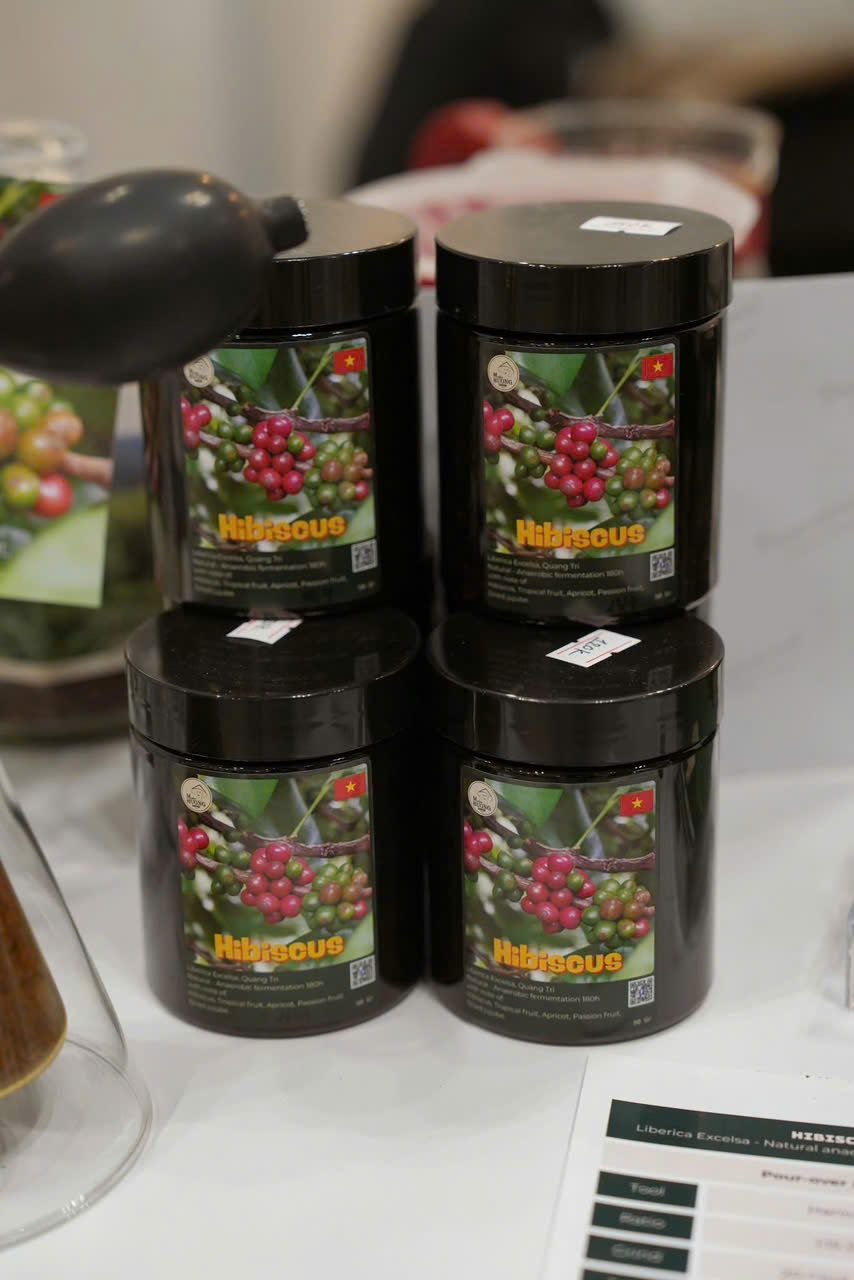
SRM — a Japanese coffee roastery and social-welfare workshop — shares its journey bringing Vietnamese green coffee to roasters and tables across Japan.
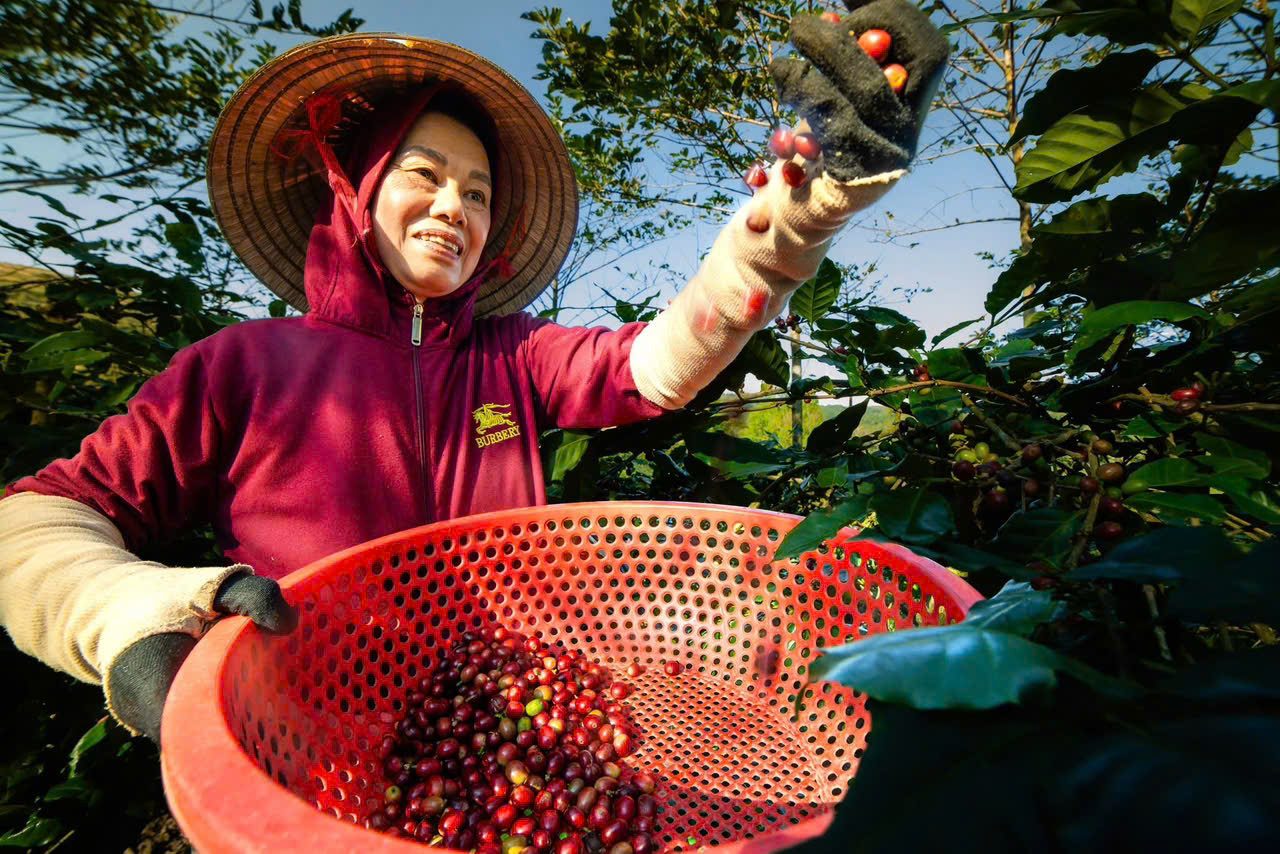
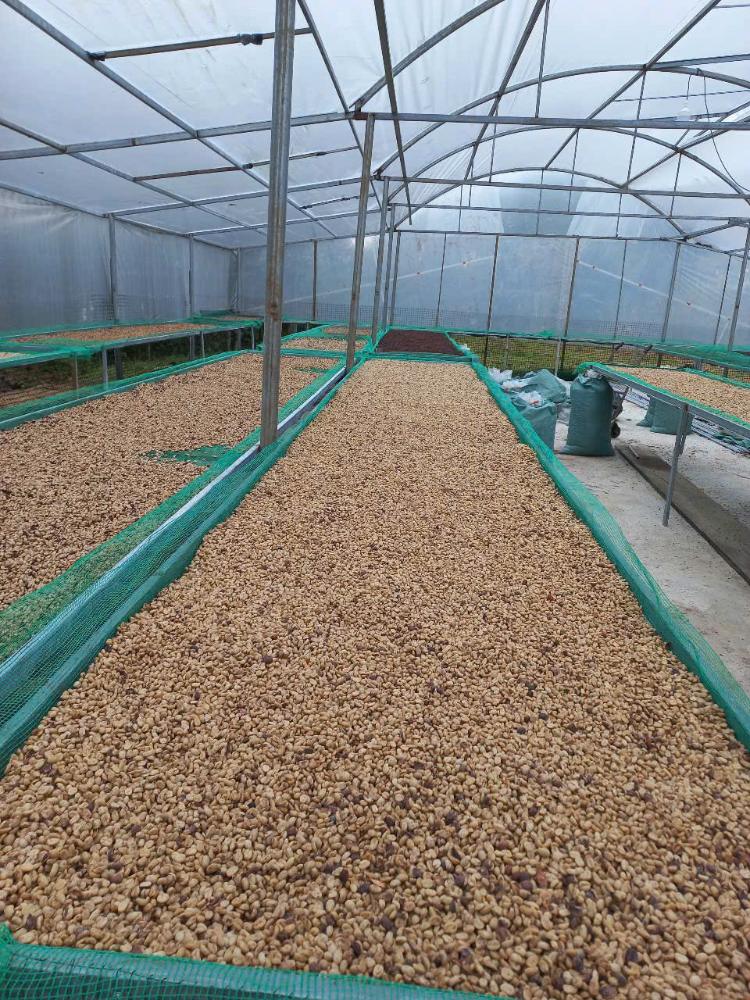
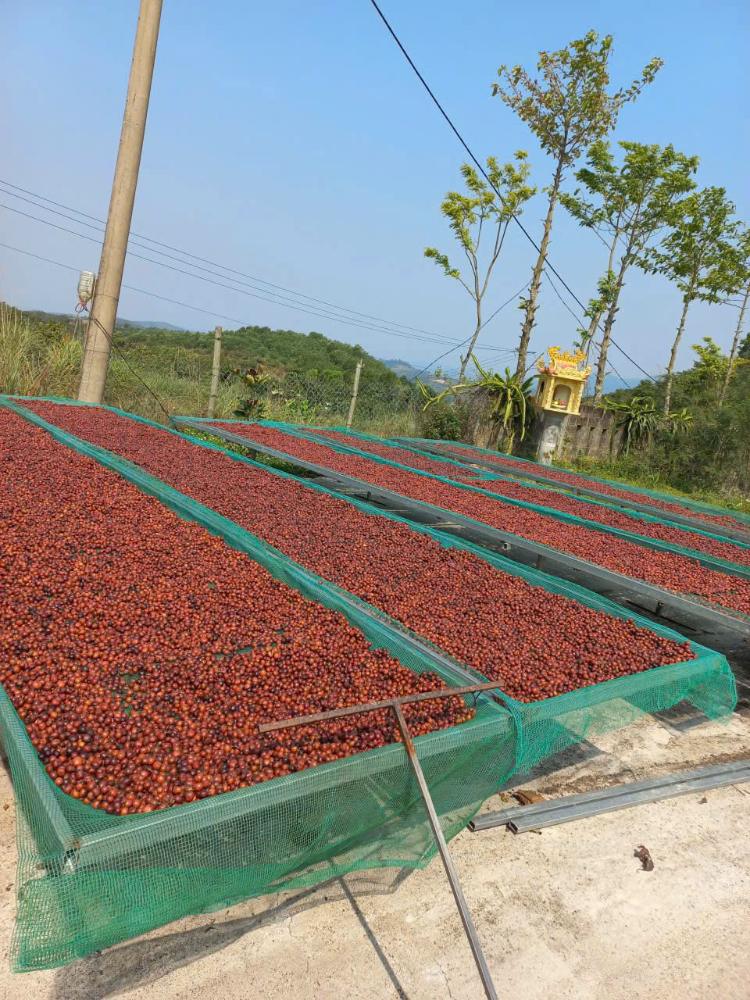
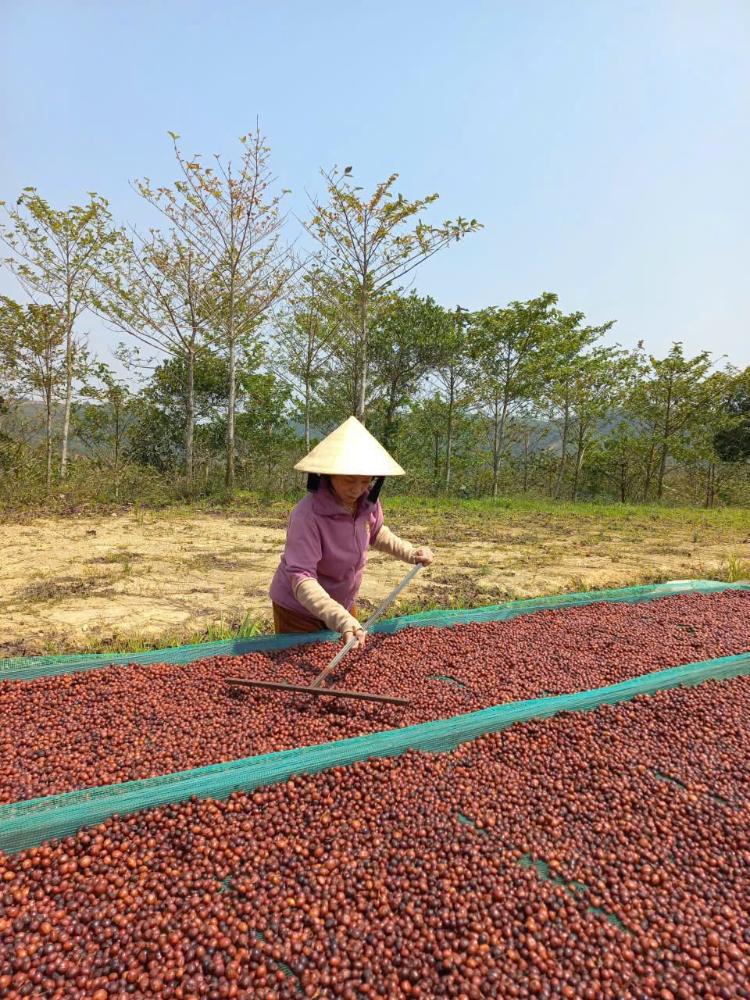
Each lot collects only fully ripe cherries, hand-picked over several passes following the natural ripening under the canopy. After picking, the coffee is processed and greenhouse-dried, controlled batch by batch.
Khe Sanh Coffee Geographical Indication certificate.
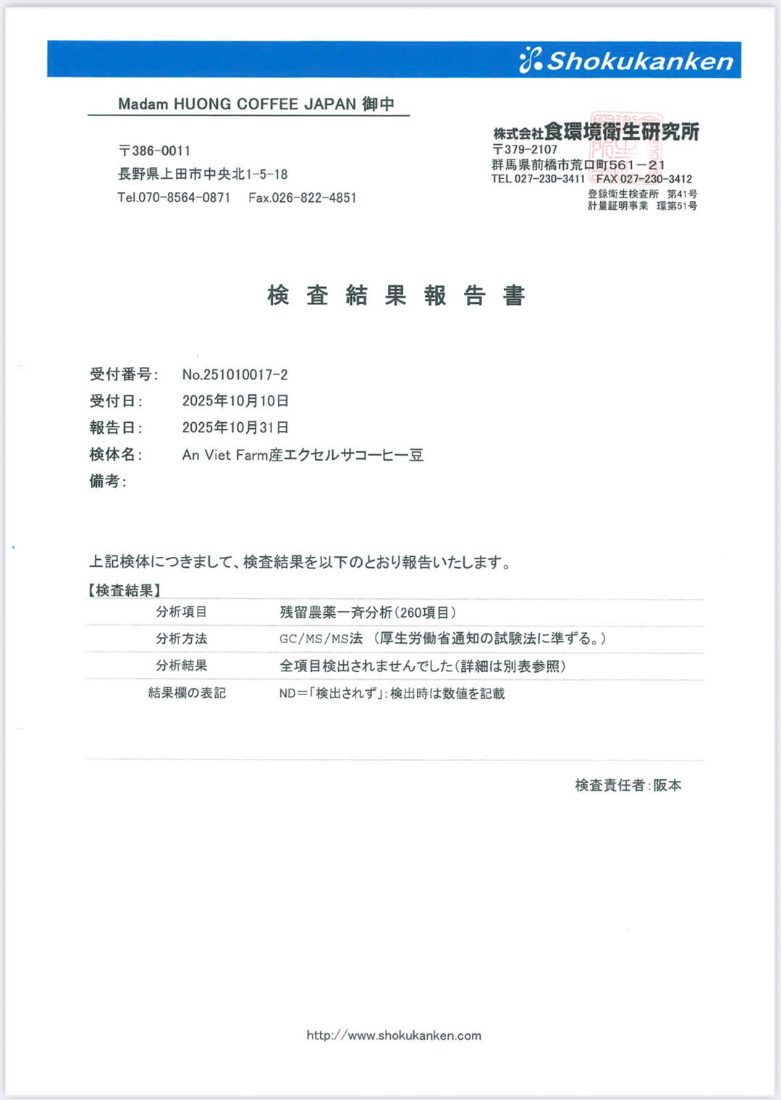
GC/MS/MS tested by a Japanese laboratory (Shokukanken) — no residue detected.
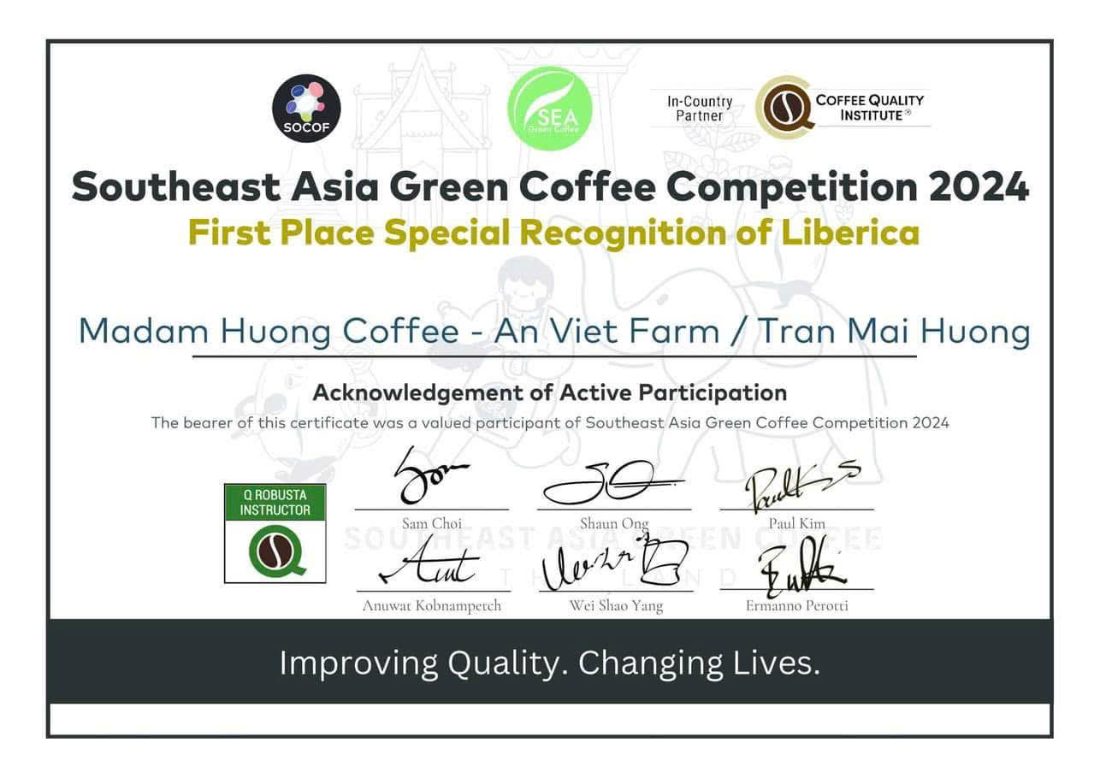
Liberica — First Place Special Recognition, SEA Green Coffee Competition 2024.
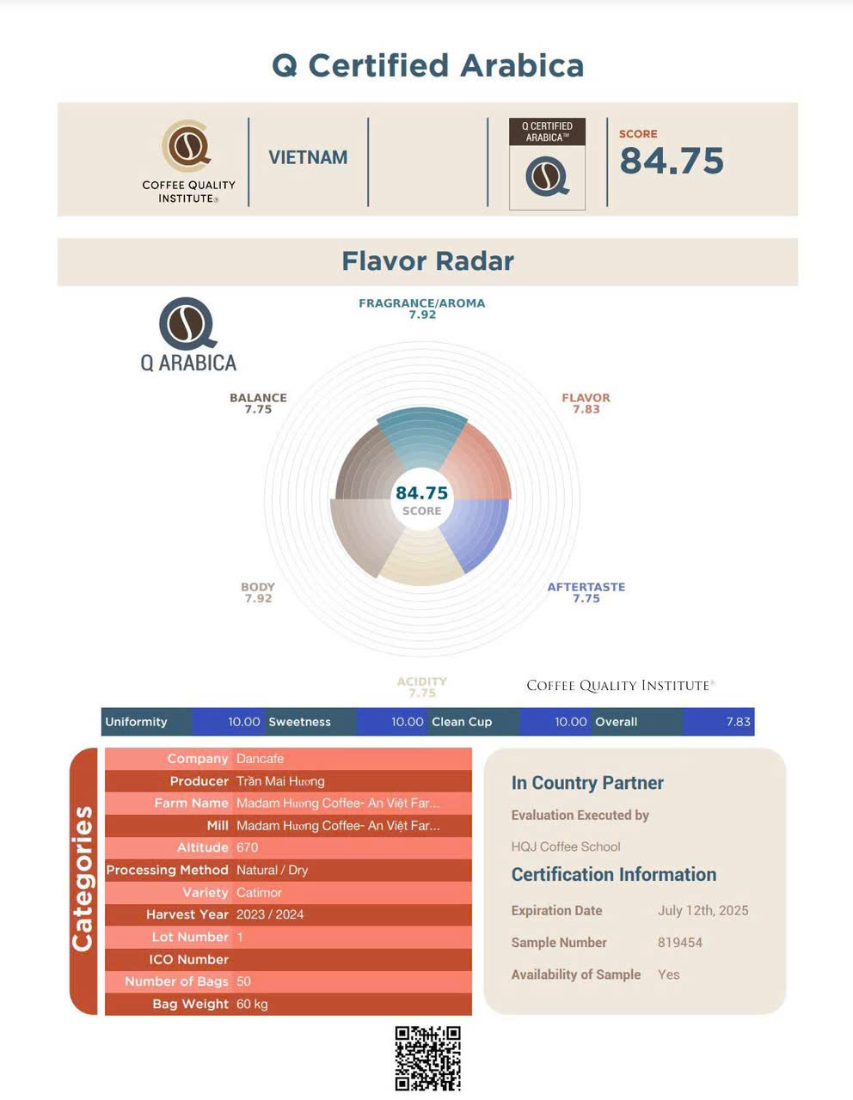
Q Certified Arabica (CQI) — Catimor variety, natural processed, 2023/2024 harvest.
The solution does not stop at cultivation but extends into processing and a specialty value chain built to international standards, freeing farmers from the role of selling raw coffee.
Certified specialty by the Coffee Quality Institute (CQI) — proving high quality at an elevation of just 600–700 m, without depending on altitudes above 1,200 m.
Liberica Excelsa won Top 1 at the Southeast Asia Green Coffee Competition 2024, reviving the value of a heritage coffee variety.
Our partner The Annamites Coffee Roaster (München) invited us to present in Germany — one of the world's most exacting markets for quality and traceability.
We established Madam Huong Coffee Japan in Ueda, Nagano. Official supply to the Japanese market is planned from Q3 2026, alongside participation in the Tokyo Coffee Show 2026.
Test results from the Shokukanken Institute (Japan) prove the coffee is entirely free of pesticide residue, meeting the standard on the path toward Organic JAS certification.
The products continue to expand into South Korea and toward the United States, step by step joining the global specialty-coffee value chain.
Every export lot traces back to a single farm and a published cultivation protocol. Selective hand-picking at 100% ripeness, controlled processing, no chemical pesticides.
The model is not merely agricultural production but a multi-dimensional cooperative ecosystem, where every actor in the value chain shares in the benefit and has a stake in a lasting commitment.
They receive transfers of organic farming and specialty processing techniques (washed, honey, natural), access preferential capital, and are supported toward international certifications (SCA, CQI).
Madam Hương Coffee – An Việt Farm guarantees offtake, invests in standard-grade storage, builds the brand, and expands both domestic and export markets.
Research institutes and experts help select drought-tolerant, disease-resistant varieties; they train specialty processing and accompany the farm toward international certification.
Support for OCOP registration, geographical indication, and brand protection; integration into new-rural programmes and connection to trade and tourism promotion.
Agritourism and farmstays bring jobs and business opportunities; forests, water sources, and biodiversity are restored; and the region's image is elevated.
The model uses existing coffee acreage and native plant varieties and requires no complex machinery — making it easy to access, easy to deploy, and highly scalable.
Complete quality certification, consolidate the first export markets (Japan and Germany), and roll out experiential tourism for visitors.
Scale up partnerships with farming households in the region, expand e-commerce and distribution to Korea, China, Europe, and the USA; evaluate the cardamom project.
Diversify products (drip-filter bags, capsules) and build experiential showrooms in Đà Nẵng, Hà Nội, and Hồ Chí Minh.
Thirty years ago, Madam Hương entered the coffee industry with an aspiration to carry the Vietnamese bean out into the world. Through the market's turbulent years, she chose a new path: specialty coffee — organic farming — agroforestry — the circular economy.
More than 30 years devoted to the coffee plant, personally building the agroforestry model and connecting farmers, businesses, and government.
Roasts, cups, and evaluates every batch of coffee; holds an Intermediate Roasting certificate in the SCA's CSP programme. Responsible for the brand's imagery and packaging.
Researches and refines processing methods (washed, honey, natural) and trains farming households; keeps bean quality stable, optimizes costs, and reduces losses.
A professional guide building coffee-tourism, farmstay, and agricultural-experience programmes that expand value for the community.
A bridge to international markets (Delica Food, Nara — Japan); supports entry strategy, certification (JAS, SCA), and finding distribution partners.
A “4-in-1” model — combining the grower, the creator, the storyteller, and the market-maker to form a closed value chain from bean to cup.
For pricing, samples or the farm’s technical dossier, leave your details — we’ll get back to you soon.
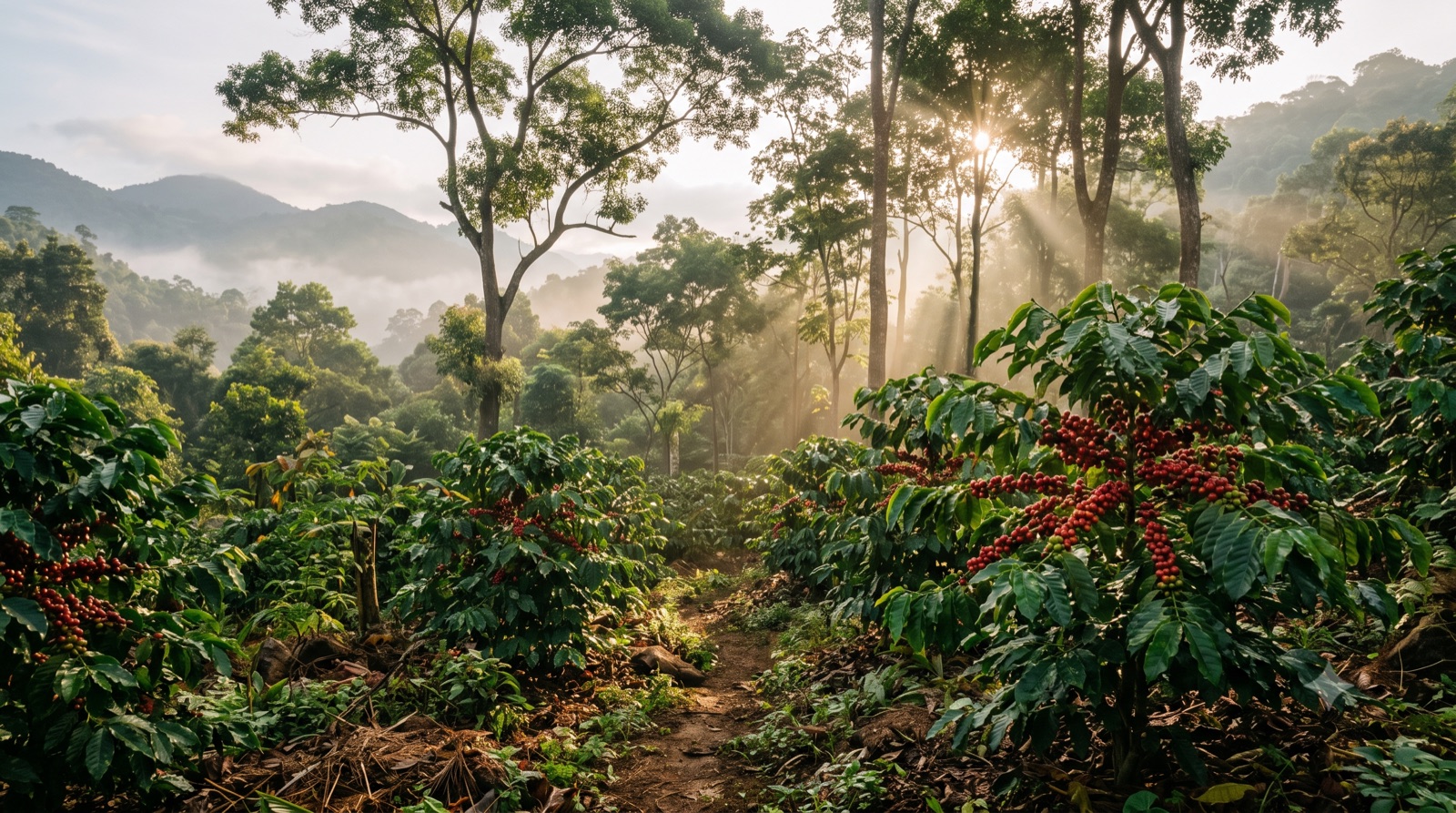
Kiến trúc vườn cà phê bốn tầng tán rừng ở Khe Sanh: sơ đồ từng tầng, vi khí hậu mát và bóng che giúp hạt chín chậm, ngọt sâu và bền vững cùng đất.
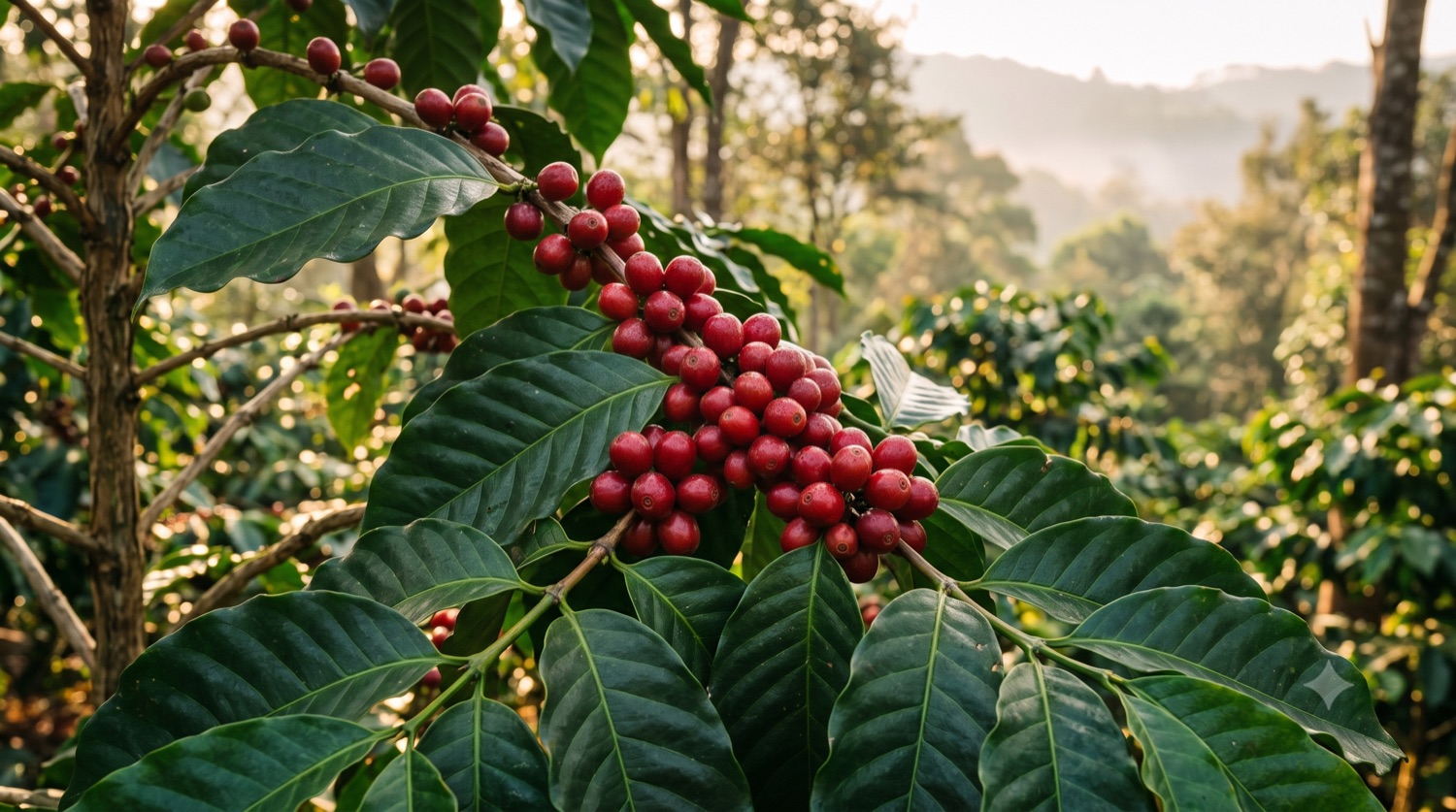
Liberica Excelsa — loài cà phê bị lãng quên gần một thế kỷ — đang trở lại bàn thử nếm đặc sản, và một lô hạt Khe Sanh vừa chứng minh vì sao.
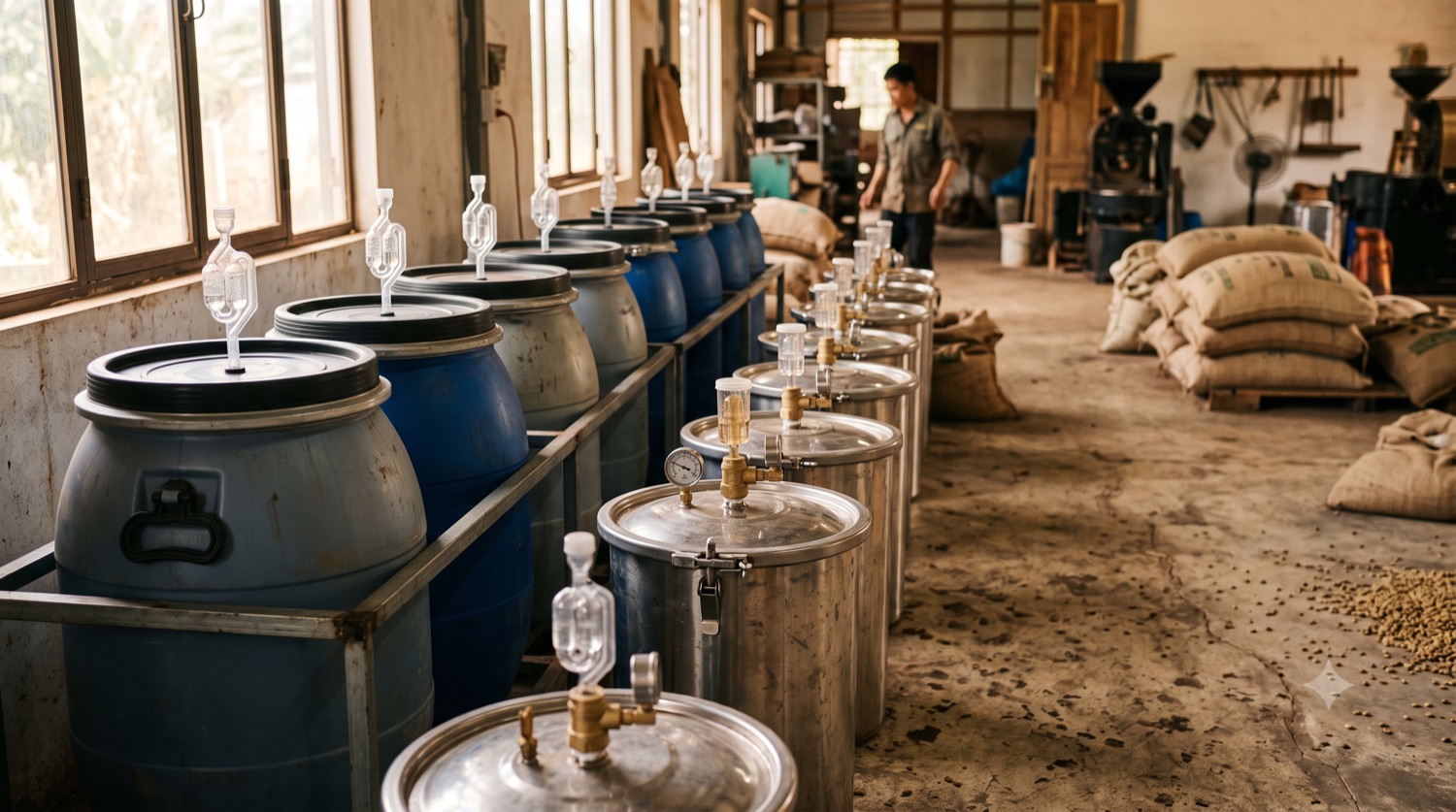
Lên men yếm khí là gì? Cách hạn chế oxy, canh nhiệt độ và pH trong thùng kín để dẫn hương trái cây vào hạt cà phê — và cả giới hạn của phương pháp này.